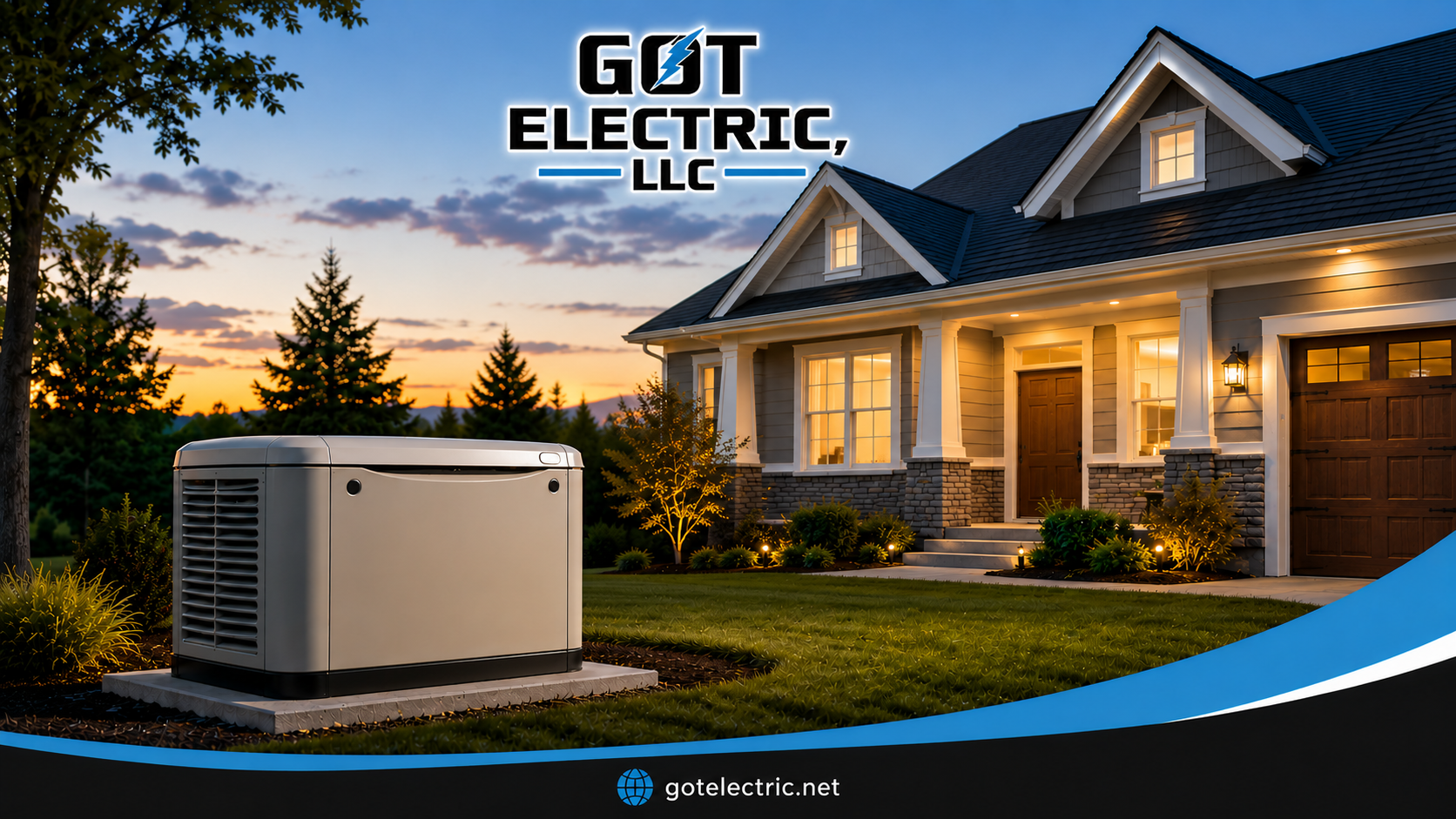
If you've ever sat through a power outage wondering when the lights would come back on, you already know why so many homeowners across Maryland and Virginia start looking into backup generators. But once you actually start shopping around, one question trips up almost everyone: how many kW do I need?
Table of Contents
It's a fair question. And honestly, it's not one you want to guess at. Go too small and your generator struggles to keep the basics running. Go too big and you've paid for capacity that just sits there unused. This guide walks through generator sizing in plain language so you can have a smarter conversation the next time you reach out about generator installation services.
Why Generator Size Actually Matters
A generator's size is measured in kilowatts (kW). That number tells you how much electrical load it can handle at once. Every appliance, light, and HVAC system in your home pulls a certain amount of power, and the moment the grid goes down, your generator has to pick up that demand instantly no warm-up period, no second chances.
Get the sizing wrong and you'll run into one of two problems. An undersized unit trips overloads, shuts off unexpectedly, or can't even start something like your air conditioner or well pump. An oversized one runs fine, sure, but you're stuck paying more upfront and burning more fuel than you need to. Neither is a great outcome, which is exactly why sizing deserves to be the first conversation, not something you figure out after the fact.
Start With What You Want to Power
Before any numbers get crunched, you have to decide what "backup power" actually means for your household. Most homeowners fall into one of three categories:
Essential circuits only. Think refrigerator, a handful of lights, sump pump, maybe your home office. It's the lightest load and the easiest on your wallet.
Partial home backup. This is where most families land — HVAC, well pump, garage door, kitchen appliances. Enough to keep life comfortable without going all in.
Whole home backup. Every outlet, every AC unit, the water heater — basically nothing changes when the power cuts out. It's the biggest setup and the most involved installation.
Once you've settled on which category fits how you actually live, sizing gets a lot less complicated.
Rough kW Ranges by Home Size
Take these as starting points, not gospel — every home's electrical load is a little different:
- Small home (under 1,500 sq ft), essentials only: roughly 7-10 kW
- Mid-size home (1,500-3,000 sq ft), partial backup: roughly 14-20 kW
- Larger home (3,000+ sq ft), whole home backup: roughly 22-30 kW or more
If you've got a bigger central AC system, an electric range, or several high-draw appliances that tend to run together, you'll likely need to size up. That's really the whole point of having a licensed electrician run an actual load calculation instead of just eyeballing a chart.
How a Licensed Electrician Actually Calculates Your Load
A proper sizing assessment isn't guesswork — there's a real process behind it:
- Listing your appliances and their wattage. Refrigerators, furnaces, well pumps, AC units — they all have running watts and starting watts (the surge needed to kick on). Starting watts can run two to three times higher than running watts, especially with motors.
- Adding up the running load. This gives a baseline for what your home draws during normal, steady operation.
- Factoring in surge loads. The electrician figures out which appliances might start up at the same time and builds in that extra demand so the generator isn't caught off guard.
- Checking your electrical panel. The panel's condition and capacity affects how everything ties together, and sometimes an upgrade gets recommended alongside the new generator.
- Matching the load to an actual model. From there, you get a recommendation built around your home — not a generic, one-size-fits-all number.
This is the kind of walkthrough you should expect from anyone offering generator installation services. If a company hands you a size over the phone without ever seeing your panel or your property, treat that as a red flag.
Why Homeowners in Baltimore County Are Paying Closer Attention to This
Some areas just get hit harder by power interruptions — storms, aging infrastructure, seasonal demand spikes, you name it. That's a big part of why home generator services in Baltimore County have become such a common search lately. Between unpredictable weather and the simple value of keeping a household running, a properly sized standby generator has gone from a nice-to-have to something a lot of local families actually plan for.
If you're in this area weighing your options, sizing matters even more. Local climate patterns, common home layouts, and typical appliance setups around Baltimore County all factor into what an electrician will end up recommending for your specific property.
5 Tips for Choosing a Best Generator Service Provider
Sizing is only half the equation — picking the right team to install and maintain that generator matters just as much. For the full breakdown, check out our 5 Tips for Choosing a Best Generator Service Provider guide. In the meantime, here's the short version:
1. Confirm they're licensed and insured. Generator work touches both electrical wiring and fuel connections, so you want a company with proper state and local licensing — not someone doing it on the side.
2. Ask about brand experience. A solid provider should be comfortable across multiple manufacturers, not just pushing whichever brand they get the best deal on. Comfort with Generac, Kohler, Briggs & Stratton, and Honeywell systems is usually a good sign.
3. Look for transparent pricing. Before any work starts, you should get a clear breakdown — the unit, labor, panel work if it's needed, permits, all of it.
4. Check if they offer ongoing maintenance. A generator that sits idle for months needs regular testing to actually work when called on. Ask whether maintenance contracts are part of the deal, not just the install.
5. Read reviews and ask about response times. When the power's out, you want someone who picks up the phone and shows up. Past customers usually tell you everything you need to know about how a provider performs once the sale is done.
How Got Electric, LLC Approaches Generator Sizing
At Got Electric, LLC, sizing isn't a quick guess over the phone. Our licensed electricians actually walk through your home's panel, your appliance load, and your day-to-day power habits before recommending anything. Whether you're after essential circuit coverage or a full whole-home setup, the goal is a generator that fits how you live — not whatever's easiest to sell.
We work across several major manufacturers — Generac, Kohler, Briggs & Stratton, Honeywell — so our recommendation comes from what actually fits your home, not what's most convenient for us. Beyond installation, we also offer generator service and maintenance contracts, because a generator nobody's tested is a generator you can't fully trust when it counts.
If you're weighing your options for generator installation services, or you're one of the many homeowners exploring home generator services in Baltimore County, getting an accurate sizing assessment is really the smartest first move. A correctly sized generator means fewer headaches, lower costs down the road, and genuine peace of mind the next time the lights go out.
Final Thoughts
Choosing the right generator size isn't about grabbing the biggest unit on the lot or the cheapest one you find online. It's about understanding what your home genuinely needs to stay safe and functional during an outage, then working with someone who can actually calculate that — not guess at it. A little planning upfront saves you from costly mistakes, frustrating breakdowns, and the kind of stress nobody wants in the middle of a storm.
Whether you're just starting to look into backup power or you're ready to move forward now, getting a real load assessment from a licensed electrician is the one step worth not skipping.
Ready to find out what size generator your home actually needs? Reach out to Got Electric, LLC for a personalized load assessment and a straightforward recommendation built around your home — not a guess.
With offices in Ijamsville, MD & Linville, VA, Got Electric offers residential and commercial electric work, including installation, safety inspections, repairs, lighting design, and troubleshooting.
Got Electric also specializes in solar Energy Projects. Our electricians are fully licensed by state and local jurisdiction, ensuring that your electrical projects will be installed to industry and code standards.
Energized by Auxilium Technology