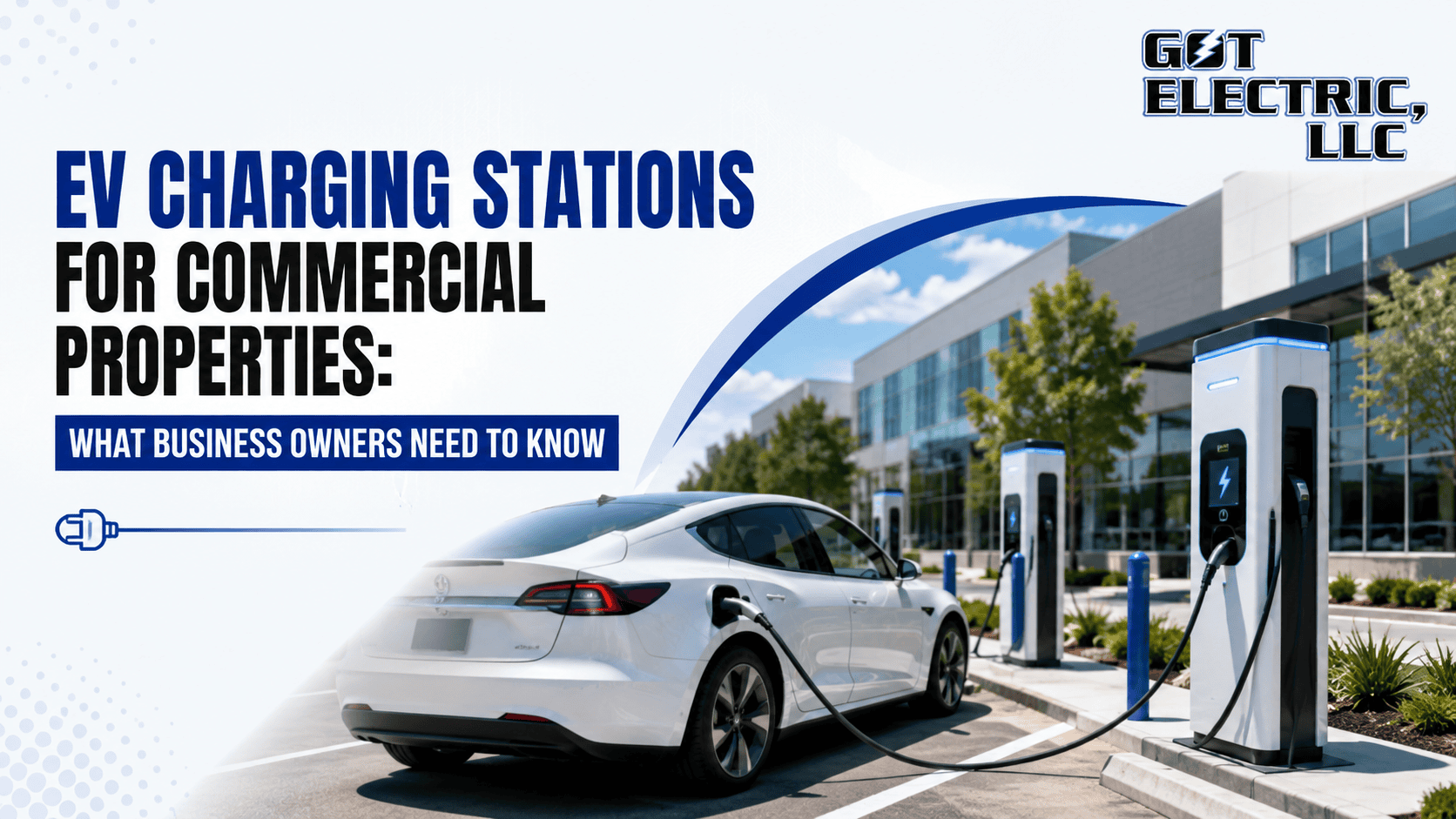


You just bought an electric vehicle, or you're about to. Naturally, the next thought is, how do I charge this thing without driving to a public station every few days? The answer for most people is a home electric car charger, but before you buy one, there's a question that gets skipped far too often: Can your home's electrical panel actually handle it?
Table of Contents
This is no trivial matter. A charging station will pull a huge amount of electricity compared to most other things in your home, and running it from a subpanel that is not up to the job can cause breakers to trip, damage to your hardware, and potentially even pose a risk of fire. In this post, we'll take a look at how you can tell if you need an upgrade on your subpanel, what such an upgrade entails, and why it's important above and beyond picking an attractive charger brand.
Why a Home Electric Car Charger Puts Real Strain on Your Panel
Most household appliances draw a fraction of the power an EV charger needs. A phone charger, a lamp, even a microwave; none of them come close.
An electrical vehicle charging station installed inside your house, particularly the Level 2 one, can take up anything between 30 and 50 amps consistently, depending on the period taken during each charge cycle. This is too much demand that most residential circuits cannot handle alongside other systems operating within the house.
Here's why that matters:
- Your panel has a maximum total amperage it can safely distribute
- Every circuit in your home kitchen, HVAC, laundry, lighting shares that same total capacity
- Adding a large, sustained new load without checking your panel's headroom is how breakers start tripping or, worse, how wiring overheats
This is why an EV charger installation is not just "run a wire to the garage." It starts with a real assessment of what your panel can handle.
Signs Your Panel May Need an Upgrade Before Installing an EV Charger
You don't need to be an electrician to catch some of these warning signs yourself. If any of the following describe your home, a panel upgrade is worth discussing before you install a charger.
Your Panel Is Older Than 20-25 Years
The older panels would have been installed in an era where there was no central air conditioning, few big appliances, and even EV charging stations were common at home. So, if you have one such old panel, then upgrading might just be the right step to take despite the EV charge station issue.
You’re Already Low on Available Breaker Slots
The Level 2 charger requires its own separate circuit and breaker. In case your panel is full, you will not have enough space for a new one without either replacing your electrical panel or getting rid of an existing circuit, which is not an ideal solution.
You Have a Fuse Box Instead of a Circuit Breaker Panel
Fuse boxes are outdated and generally can't support the sustained load a home EV charger requires. If this describes your home, a panel replacement is a prerequisite, not an option.
Your Panel Is Rated Below 200 Amps
Many old homes come with a 100- or 150-amp service panel. The addition of a Level 2 charger along with your current electrical load may exceed the capacity that your small service panel is rated for, particularly if your house uses central air conditioning and other major appliances.
Lights Flicker or Dim When Large Appliances Run
If your lights already dim slightly when the AC or a big appliance kicks on, that's a sign your panel is working close to its limit even before adding an EV charger to the mix.
You’ve Had an Electrician Mention It Before
Just because an electrical inspection from the past noted that your panel is old or at capacity doesn’t mean that that information will disappear on its own.
What a Panel Upgrade for EV Charging Actually Involves
If an assessment shows your panel needs work, here's what the process generally looks like:
- Load Calculation – An electrician calculates your home's total electrical demand, including the new EV charger, to confirm what panel capacity you actually need.
- Panel Replacement or Upgrade – Depending on your current setup, this might mean replacing an old panel entirely with a higher-capacity one or, in some cases, adding a subpanel dedicated to the EV charger.
- Dedicated Circuit Installation – A Level 2 charger needs its own dedicated circuit, sized correctly for the charger's amperage draw.
- Permitting and Inspection – Panel upgrades typically require a permit and inspection to meet local electrical code—this isn't optional paperwork; it's a safety check.
- Charger Installation and Testing – Once the panel and circuit are ready, the charger itself is installed and tested to confirm it's operating correctly.
It is at this point that having the help of an electrician knowledgeable about the charger brand being installed is helpful. The reason for this is that each of the brands mentioned, Tesla, ChargePoint, JuiceBox, and EVgo chargers, requires its own specific installation.
Home Electric Car Charger Options and What They Mean for Your Panel
Not all home charging stations draw the same amount of power, and the brand you pick affects what your panel needs to support.
- Tesla Chargers – Popular for their reliability and ease of use for Tesla owners specifically, with flexible charging schedules.
- ChargePoint – Known for faster charging times compared to some other residential options, which also means it draws power more intensively during a charge cycle.
- JuiceBox – A WiFi-enabled option that lets you schedule charging remotely, which can help you shift charging to off-peak hours and reduce strain on your system.
- EVgo – Built with sustainability in mind, offering a dependable home charging experience with recyclable components at end of life.
Whichever brand you choose, the charger itself is only half the equation. The panel behind it determines whether that charger runs safely and efficiently for years or becomes a recurring problem.
Why This Isn’t a DIY Decision
There’s a temptation to think that all a licensed electrician needs to do to install your charger is “add an outlet” without ever seeing the panel. However, this isn’t always the case since there may be room on the panel. However, making assumptions here comes with consequences:
- An undersized panel forced to carry a new heavy load can overheat wiring over time
- Circuits without proper capacity trip constantly, which is both inconvenient and a sign of an underlying problem
- Incorrect installation can void your EV charger's warranty or create issues with your home insurance
A proper load calculation takes the guesswork out of this entirely, and it's a standard part of any professional EV charger installation.
How Got Electric Handles EV Charger Installations
At Got Electric, LLC, we install home charging stations for all major brands, including Tesla, ChargePoint, JuiceBox, and EVgo, across Maryland, Virginia, and the DC Metro Area. Before any charger goes in, we assess whether your existing panel can safely support it, and if it can't, we handle the panel upgrade as part of the same project instead of leaving you to sort it out separately.
With more than 50 years of combined experience, our team handles the full process from panel assessment through installation and inspection so you're not left with a charger that's technically installed but not actually safe to use every day.
Frequently Asked Questions
How do I know if my panel can handle a home EV charger without an upgrade?
The only reliable way is a load calculation done by a licensed electrician. It accounts for your panel's total capacity, everything already running on it, and the new demand from the charger.
What amperage panel do I need for a Level 2 home charging station?
It depends on your home's total electrical load, but many homes installing a Level 2 charger benefit from a 200-amp panel. Smaller or older panels often need an upgrade to safely support the added draw.
Can I install a home electric car charging station myself?
No. This work involves your home's main electrical panel and a dedicated high-amperage circuit. It requires a licensed electrician, a permit, and an inspection in most areas — this isn't a safe or legal DIY project.
Does a panel upgrade delay my EV charger installation?
It adds time compared to a simple charger install, but it's built into the process rather than a separate project when you work with an electrician who handles both. Skipping this step to save time is what leads to bigger problems later.
Will a panel upgrade increase my home’s value?
Yes, in most cases. An upgraded panel signals to future buyers that your home's electrical system can support modern demands, including EV charging, which is an increasingly common request from buyers.
How long does a typical panel upgrade take?
This varies by scope; replacing a breaker can take about an hour, while a full panel replacement can take a full day or more. Your electrician should give you a clear timeline after assessing your specific panel.
Get Your Panel Checked Before You Buy a Charger
If you're considering a home electric car charging station, the smartest first step isn't picking a brand; it's finding out whether your panel is ready for it. Skipping that step is how homeowners end up with tripped breakers, failed inspections, or a charger that never gets installed correctly the first time.
Contact Got Electric for a panel assessment and EV charger installation across Maryland, Virginia, and the DC Metro Area, or call us directly:
With offices in Ijamsville, MD & Linville, VA, Got Electric offers residential and commercial electric work, including installation, safety inspections, repairs, lighting design, and troubleshooting.
Got Electric also specializes in solar Energy Projects. Our electricians are fully licensed by state and local jurisdiction, ensuring that your electrical projects will be installed to industry and code standards.
Energized by Auxilium Technology