
Installing EV charging stations at a commercial property usually comes down to three things: how much electrical capacity your building already has, which type of charger actually fits how people use your space, and whether you're doing this to attract customers, support employees, or serve a fleet. Get those three questions answered early, and the rest of the project is mostly logistics.
Table of Contents
Here's what that actually looks like in practice.
Why Businesses Are Adding EV Charging Now
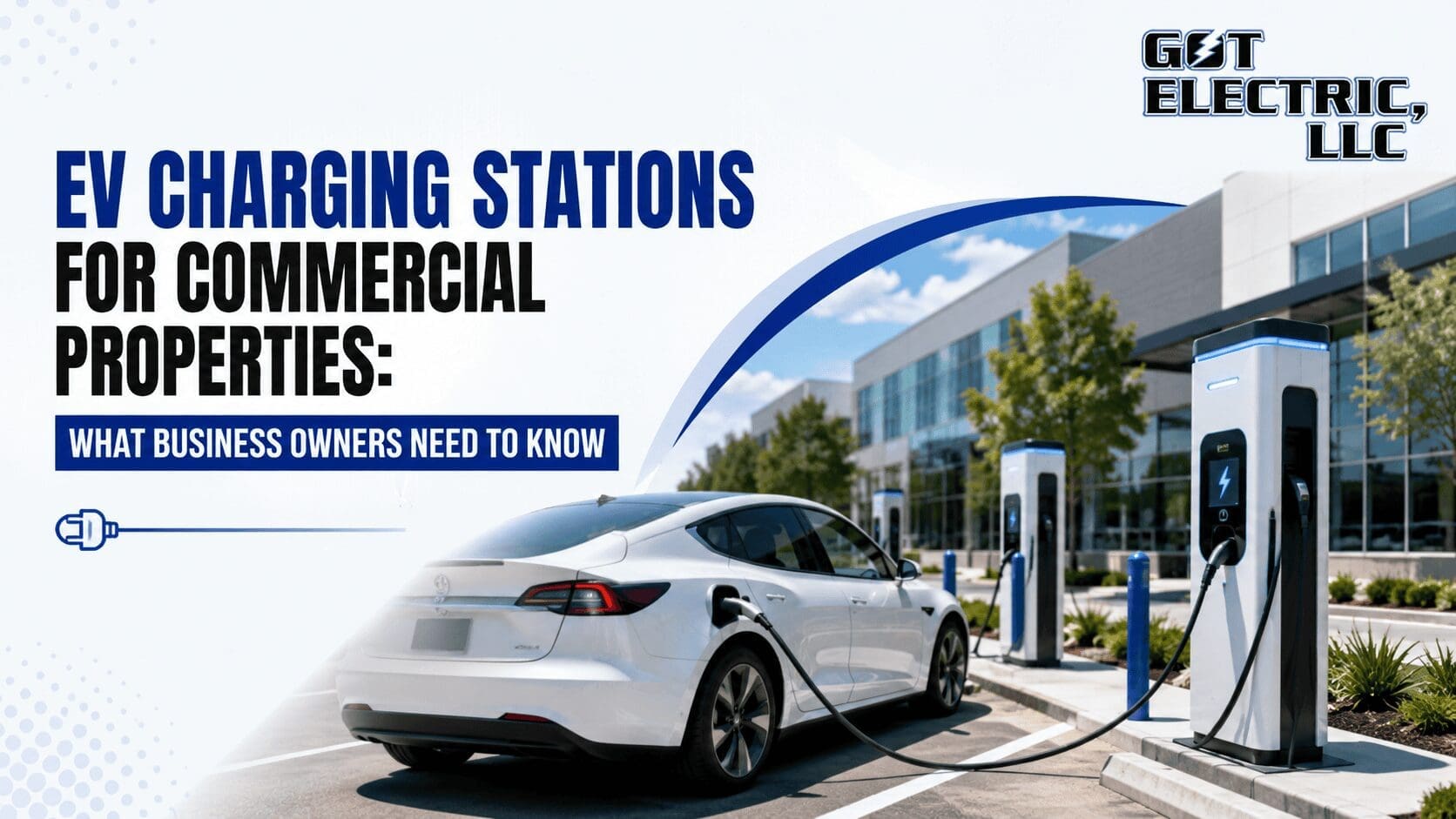
This isn't a niche request anymore. Retail centers, office buildings, apartment complexes, and hotels are all getting asked about EV charging stations by tenants, customers, and employees and in a lot of cases, it's becoming a factor in whether someone chooses your property over the one down the street. There's also a straightforward business case: charging stations can be metered and monetized, and they tend to increase how long visitors stay on site (which, for retail, usually means more spending).
For EV Commercial Chargers specifically, the calculation is a little different depending on whether you're serving customers who'll be parked for an hour, employees parked all day, or a fleet that needs a fast, predictable turnaround.
Level 2 vs. DC Fast Charging: Which Fits Your Property
Level 2 chargers are the most common commercial installation. They deliver a full charge over several hours, a good fit for:
- Office buildings (employees parked 8+ hours)
- Apartment and condo properties
- Retail centers where people are shopping or dining for a while
- Hotels
DC fast chargers deliver a much quicker charge, often 80% in 20–40 minutes but cost significantly more to install and require more electrical capacity. They make sense for:
- Fleet operators needing fast turnaround
- High-traffic retail or travel corridor locations
- Properties positioning themselves as a charging destination, not just an amenity
Most commercial properties don't need DC fast charging. It's tempting to assume faster is always better, but for a property where people are already parked for hours anyway, Level 2 charging does the job at a fraction of the installation cost.
What the Installation Process Actually Involves
- Site assessment — an electrician evaluates your building's existing electrical capacity and where chargers make sense physically (parking layout, conduit runs, accessibility).
- Load calculation — determines whether your building's electrical service can support the chargers as planned, or whether upgrades are needed first.
- Permitting — commercial EV installations require permits and inspection, and timelines vary by county.
- ADA compliance review — accessible charging spaces have specific requirements for spacing, signage, and reach range that need to be part of the design, not an afterthought.
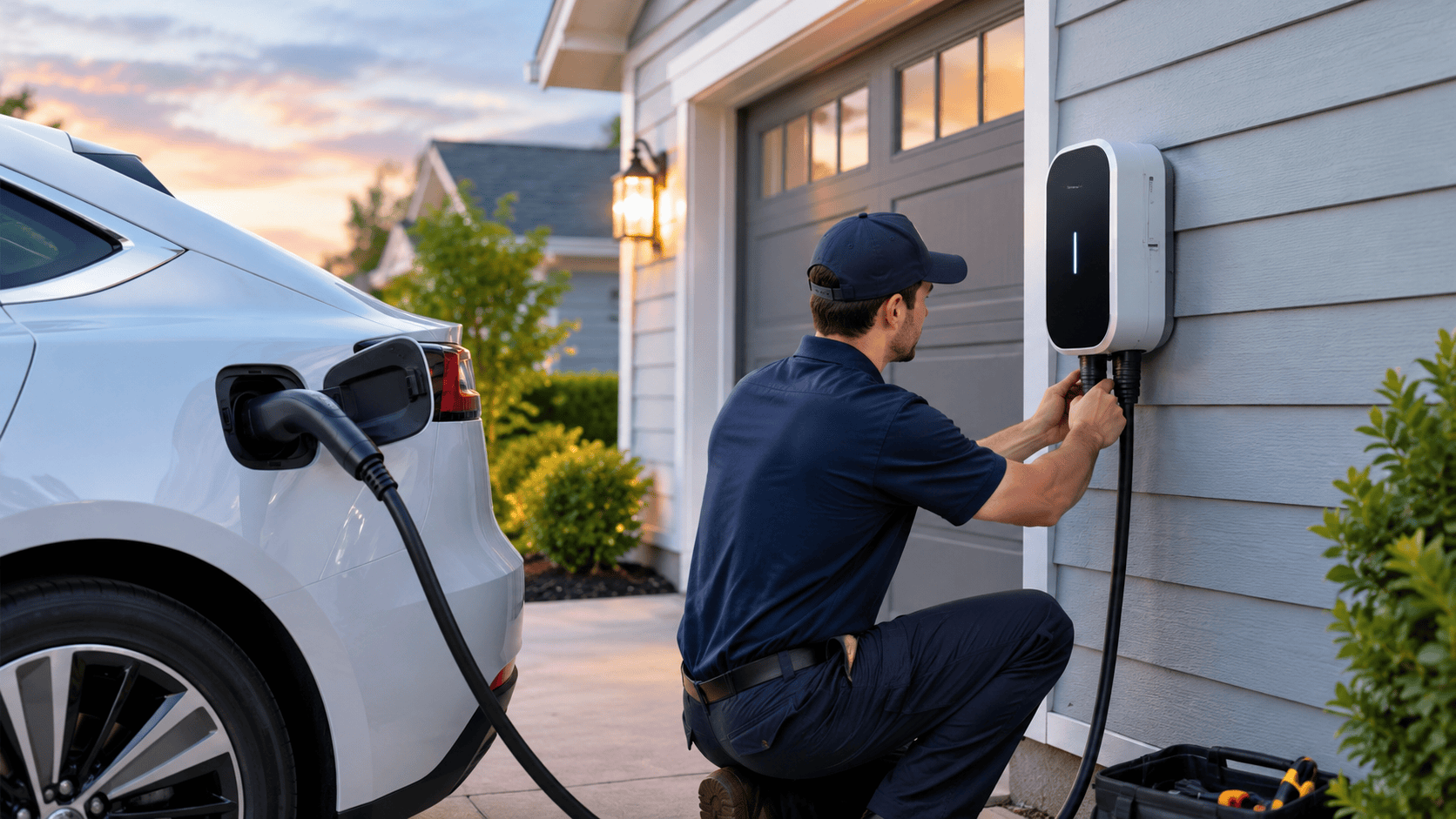
- Installation and electric charger installation work — running dedicated circuits, mounting units, and connecting to the building's electrical system.
- Inspection and activation — final sign-off before the stations go live.
The site assessment step is where most surprises get caught. A building that looks like it has plenty of electrical capacity on paper sometimes doesn't once existing loads (HVAC, lighting, tenant equipment) are factored in which is exactly why this shouldn't be skipped or rushed.
A Note on Incentives
There are federal and sometimes state or utility-level incentives available for commercial EV charging infrastructure, and they do meaningfully offset installation costs in a lot of cases. That said, the specific programs, percentages, and eligibility rules change often enough that we're not going to guess at numbers here ask your electrician and your accountant what currently applies to your project before budgeting around an assumed incentive.
Frequently Asked Questions
How much does it cost to install commercial EV chargers?
It varies significantly based on the number of stations, charger type (Level 2 vs. DC fast), and whether your building's electrical service needs upgrading first. A site assessment is the only way to get an accurate number for your specific property.
Do I need special permits for commercial EV charging stations?
Yes. Commercial installations require electrical permits and typically a separate review for accessibility compliance, depending on your jurisdiction.
How many chargers does my property actually need?
This depends on parking capacity, expected usage, and how long vehicles typically stay. A retail property with high turnover needs a different setup than an office building with all-day parking.
Can existing parking lot lighting circuits be used for EV chargers?
Generally no EV chargers need dedicated circuits sized for their specific load. Sharing circuits with lighting or other equipment isn't code-compliant and creates reliability issues.
Considering EV charging for your commercial property?
Got Electric handles EV commercial chargers and general commercial electrician services across Maryland and Virginia, starting with a straightforward site assessment. Request an estimate.
With offices in Ijamsville, MD & Linville, VA, Got Electric offers residential and commercial electric work, including installation, safety inspections, repairs, lighting design, and troubleshooting.
Got Electric also specializes in solar Energy Projects. Our electricians are fully licensed by state and local jurisdiction, ensuring that your electrical projects will be installed to industry and code standards.
Energized by Auxilium Technology