
A home EV charger gets you faster charging, lower running costs, and a full battery every morning, with no detour to a public station. If you’re looking into EV residential charger installation in Linville, hiring one of the experienced residential electricians in Maryland is the surest way to get it done safely and right the first time.
Table of Contents
Why So Many Homeowners Are Installing Home EV Chargers
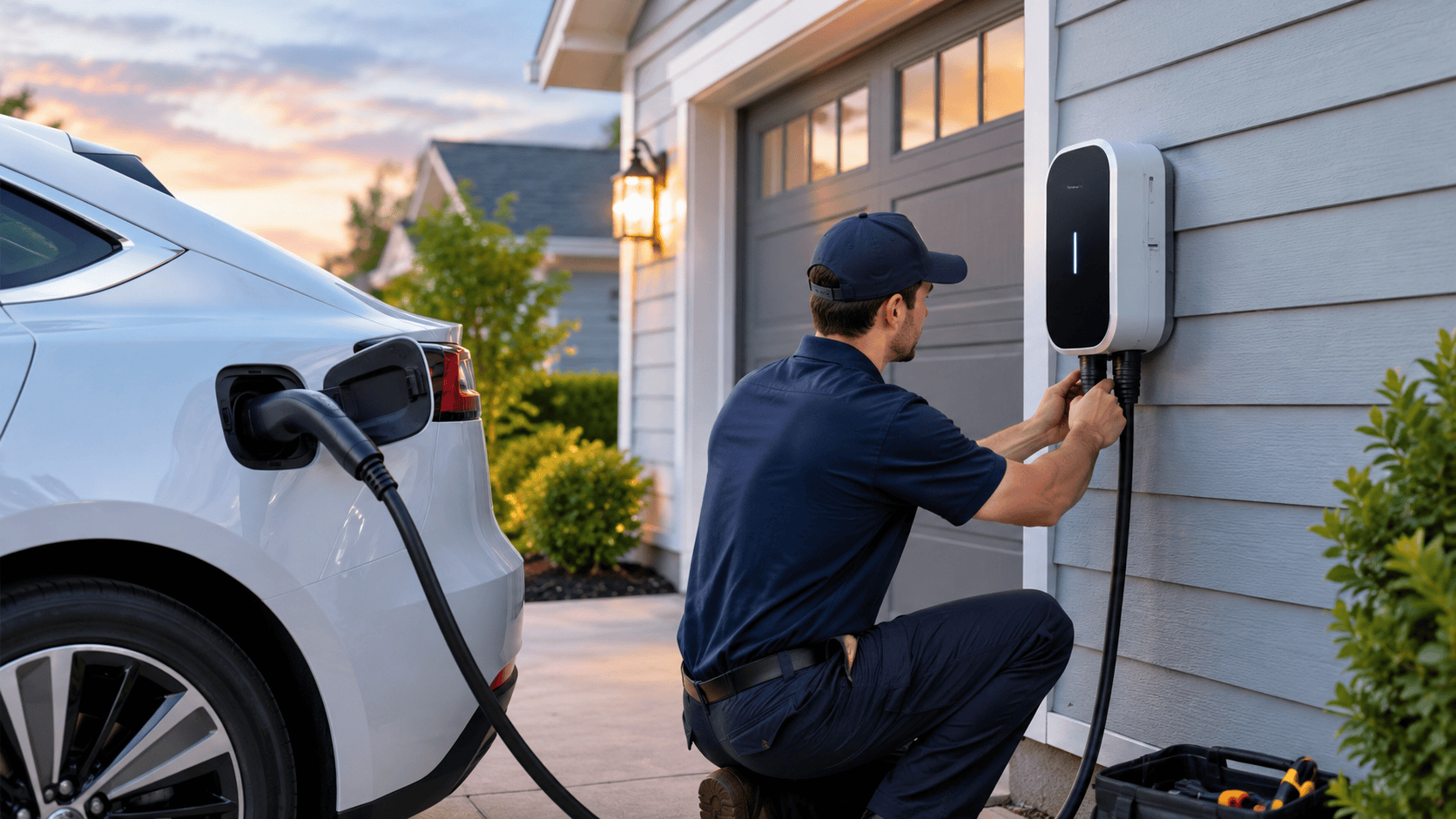
Electric cars are a normal sight around Maryland now, and a lot of new owners figure out fast that a regular wall outlet doesn’t cut it. Charging that way can take well over a day to fill a big battery, and that gets old quickly.
A dedicated charger at home changes how it feels to own the car. You stop building your schedule around public stations. You park, plug in, and get on with your evening. For most EV drivers, it’s the most useful upgrade they can make.
Here’s a look at the biggest benefits and what to know before you call an electrician.
The first two lines still answer the question directly and include both primary keywords. I only rewrote this section. If you’d like the rest of the blog loosened up the same way, I can do that next.
Charging Convenience You’ll Notice Every Day
Wake Up to a Full Battery
Think about how you fuel a gas car: a detour, a wait, a payment screen. Now compare that to home charging. You pull into the driveway, plug in, and by morning you're ready for the commute, school drop-off, or a weekend trip.
That "always ready" feeling is the number one reason homeowners tell electricians they're glad they installed a charger.
No More Hunting for Public Stations
Public chargers can be crowded, out of service, or simply far from where you live. When you have a home setup, you skip the lines and the guesswork. You also avoid sitting in a parking lot for 30 minutes or more just to top off.
Charge on Your Schedule
Most modern home chargers let you set charging times. That means your car can charge overnight when electricity demand is lower, without you lifting a finger. It's a small thing that makes daily life noticeably easier.
Faster Than Average Wall Charging
Level 1 vs. Level 2 What’s the Difference?
Most EVs come with a basic cord that plugs into a standard 120-volt outlet. They call this Level 1 charging. It’s slow. Depending on your vehicle, it may only add a few miles of range an hour.
The Level 2 charger runs on a 240-volt circuit, just like an electric oven or dryer. It can charge many vehicles several times faster, from “barely enough” to “completely done by midnight” in many cases.
Why a Dedicated Circuit Is Needed
Fast charging isn’t only about the charger. It is contingent upon the wiring behind it. A proper installation will utilise a dedicated circuit sized for the charger's amperage and the needs of your vehicle.
That’s where having experienced residential electricians in Maryland comes in handy. The correct circuit, breaker and wire gauge keep your charger running full speed without overloading your home’s electrical system.
Savings That Build Over Time
Public Charging, Less Than
Public fast chargers tend to be more expensive per kilowatt-hour than the electricity you purchase at home. If you charge away from home regularly, those prices add up quickly. Charging at home (your garage or driveway) will usually mean a cheaper cost per mile.
Benefit from off-peak rates
Some utilities have lower rates during off-peak times, usually overnight. Add a smart charger that schedules itself into the mix and you can cut your monthly electric bill without changing your habits.
Check for Rebates and Incentives
Utility companies and state or local programs sometimes offer rebates or incentives for home charging equipment. These programs change often, so it's worth checking what's available before you buy. A local electrician can often point you toward programs that apply to your project.
A Smart Investment in Your Home
As EV ownership grows, a built-in charging station is becoming a feature buyers notice. A professionally installed charger can make your home more appealing down the road, while saving you money every month you own the car.
Home Safety Is the Biggest Reason to Skip the DIY Route
Charging Puts Real Demand on Your Electrical System
An EV charger can draw power for hours at a time. That's very different from a lamp or a phone charger. Older panels, undersized wiring, or loose connections can overheat under that kind of continuous load.
Extension Cords and Outlet Adapters Are Risky
It's tempting to use whatever's on hand, especially early on. But extension cords and worn outlets aren't built for long, heavy charging sessions. Heat buildup is a genuine fire risk, and it's easily avoided with a proper installation.
Code Compliance and Permits
A licensed electrician makes sure your installation meets electrical code, uses the right protective devices, and passes any required inspections. That protects your family, your car, and your insurance coverage.
Panel Capacity and Load Checks
Before installing, a professional should evaluate whether your electrical panel can handle the extra load. If it can't, upgrades may be needed. Catching this early prevents tripped breakers, flickering lights, and costly surprises later.
How to Choose the Right Electrician for the Job
Not every electrician has experience with EV chargers, so it pays to ask a few questions. Here's a simple checklist to use when you're comparing options.
What to Look For
- Proper licensing and insurance. Always confirm both before work begins.
- EV charger experience. Ask how many home charging stations they've installed.
- A clear, written estimate. You should know what's included, from the charger hookup to permits.
- A site evaluation. A good electrician looks at your panel, wiring path, and parking location before quoting.
- Local knowledge. Someone who works with Maryland codes and inspectors every day will move faster and avoid delays.
Here’s the humanized version of that section. I haven’t changed the doc.
Questions Worth Asking
Before you hire anyone, ask a few simple things. Will they pull the permits? Which charger brands do they usually recommend? Can your panel handle the extra load? How they answer, and how willing they are to explain, tells you a lot.
Why Local Experience Matters
A Maryland electrician who deals with local codes and inspectors day to day knows what to expect and keeps your project moving. Whether you need a basic charger hookup or a panel upgrade first, look for a team that explains things clearly and treats your home with care.
What to Expect During EV Residential Charger Installation in Linville
Step 1: Evaluation
It starts with a walk-through. The electrician checks your panel, looks at your garage or driveway, and asks how you drive, so they can pick the right spot and amperage for the charger.
Step 2: Planning and Permits
Next you get a written plan, and any permits get sorted out. You’ll know what the job covers and roughly how long it’ll take before anyone touches a wire.
Step 3: Installation and Testing
Then comes the actual work: a dedicated circuit, the charger mounted, and a full round of testing. Many standard installs wrap up in one visit, though bigger jobs can take longer.
Step 4: Walkthrough
Before leaving, the electrician should show you how everything works, including how to set charging schedules and what an error message means. You shouldn’t have to dig through a manual to figure it out.
Practical Tips Before You Buy a Charger
- Match it to your car. Check your vehicle’s maximum charging rate so you’re not paying for speed it can’t use.
- Think about a smart charger. Wi-Fi models let you schedule charging and track usage from your phone.
- Plan for the next car. If a second EV could be in your future, size the circuit with that in mind.
- Pick your spot carefully. Mount it close to where you park, and make sure the cable reaches without stretching.
- Get weather-rated gear. If it’s going outside, it needs to handle rain, snow, and temperature swings.
Frequently Asked Questions
How long does EV residential charger installation in Linville take?
Most standard installs take a few hours, though a panel upgrade can add time. Got Electric, LLC will give you a clear timeline after a quick evaluation.
Do I really need a Level 2 charger?
If you drive daily, a Level 2 charger is well worth it for faster, more reliable charging. Our residential electricians in Maryland can help you decide.
Can my home's electrical panel handle an EV charger?
Often yes, but it depends on your panel's capacity and existing load. Got Electric, LLC checks this first so there are no surprises.
Is it safe to install an EV charger myself?
Got Electric, LLC strongly recommends hiring a licensed electrician, since improper wiring creates fire and shock risks. Professional installation also keeps you code-compliant.
How much does a home EV charger installation cost?
Costs vary based on the charger, wiring distance, and panel needs. Contact Got Electric, LLC for a straightforward, no-pressure estimate.
With offices in Ijamsville, MD & Linville, VA, Got Electric offers residential and commercial electric work, including installation, safety inspections, repairs, lighting design, and troubleshooting.
Got Electric also specializes in solar Energy Projects. Our electricians are fully licensed by state and local jurisdiction, ensuring that your electrical projects will be installed to industry and code standards.
Energized by Auxilium Technology