
Picking good home generator services matters because the power never seems to go out at a convenient time. It’s usually the middle of a storm or a freezing January night, and suddenly the fridge, the heat, and the sump pump all depend on one machine working. The right Home Generator Installation Service in Maryland gets that machine set up properly, and a team that also does repairs keeps it running for years afterward.
Table of Contents
Understanding Residential Backup Systems
Think of residential backup systems as a safety net that wakes up on its own. When utility power drops, the system senses it, starts the generator, and sends electricity into your home through a transfer switch. That switch also stops power from flowing back onto the grid, which keeps line workers safe. Most units run on natural gas, propane, or diesel, depending on what’s available at your property.
The real value shows up on the worst nights. A family with a newborn doesn’t have to worry about heat. Someone working from home doesn’t lose a day of work. A basement stays dry because the sump pump never stopped.
- Power returns automatically, even if nobody’s home
- Heating, refrigeration, and medical equipment stay on
- Food, pipes, and floors are protected during long outages
How to Choose the Right Generator
Start with a simple question: what do you actually need running? Some people want the whole house covered. Others are fine with the basics. That one answer drives the size, fuel type, and budget.
- Write down your must-have circuits, like the furnace, well pump, and refrigerator
- Add up the running and starting watts for each
- Check which fuel is realistic at your address
- Look at where the unit can sit, since placement rules apply
Choosing the Right Home Generator Installation Service in Maryland
A generator is only as reliable as the person who installs it. Maryland weather swings from summer thunderstorms to ice in winter, so outages can be short or can stretch for days. Permit and code requirements can also differ by county, which is why local experience counts for more than people expect.
An undersized generator will overload and trip. An oversized one costs more than it should. Either way, you’re paying for a mistake you didn’t need to make, so ask how the installer plans to size your system.
- Proper sizing based on your actual loads
- Transfer switch and wiring done to code
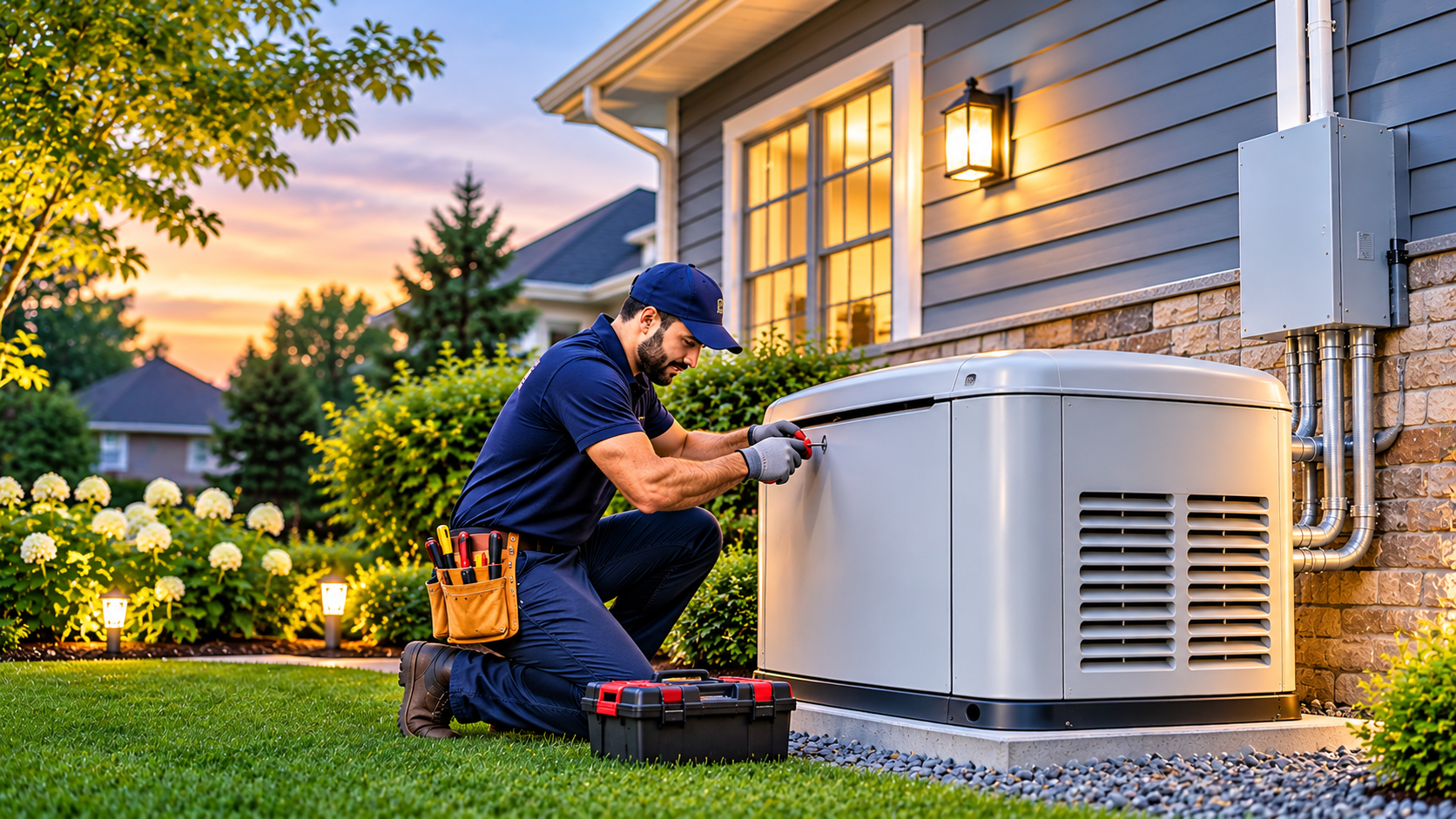
- Safe placement away from windows, doors, and anything flammable
- Gas or propane lines installed and tested correctly
Why You Need a Qualified Electrician for Generator Installation
A generator isn’t like a new dishwasher. It connects straight into your home’s electrical panel, and the margin for error is small. A poorly wired transfer switch can damage appliances, start a fire, or push power back onto the lines where a utility worker might be touching them. That’s the kind of risk a good electrician for generator work is trained to avoid, because they understand load calculations, grounding, and panel capacity.
DIY attempts tend to go wrong in the same few places. People skip the transfer switch, ground it badly, or overload a circuit without realizing it. Unpermitted work can also cause headaches later, especially during an inspection or when you sell the house.
- Wiring mistakes and missing transfer switches
- Weak or incorrect grounding
- Overloaded circuits
- Permit and inspection problems
Signs Your Home Generator Needs Repair
Generators sit unused for months, so small problems can hide until the lights go out. Catching them early is almost always cheaper than finding out during a storm. If you notice any of the signs below, it’s time to call someone for home generator repair.
A slow crank or a sputtering start is the classic warning. So is a new knocking or grinding sound. Flickering lights during a test run can point to unstable output, and a battery covered in corrosion rarely ends well.
- Hard starting or no start
- Strange noises that weren’t there before
- Inconsistent power or flickering
- Weak, corroded, or repeatedly dead batteries
- Shutting down on its own during a test or under load
When to Schedule Home Generator Repair and Maintenance
The best time to deal with generator repair is on a calm, sunny day. During a storm, every repair shop in the county is slammed, and you’re stuck waiting. Routine inspections let a technician spot worn parts, fuel problems, or loose electrical connections before they turn into a breakdown.
Most homeowners do well with one professional inspection per year, ideally before storm season, along with whatever the manufacturer recommends. If your generator just ran for several days straight, it’s smart to have it looked at afterward.
- Follow the maker’s maintenance schedule
- Book a yearly inspection before storm season
- Get it checked after long outages or heavy use
- Don’t sit on a warning sign
Choosing a Reliable Generator Service Provider
Look for a company that sticks around after the install. Selling you a unit is the easy part. What you want is someone who’ll answer the phone when it acts up two years later. Don’t be shy about asking direct questions.
- Experience: What types of generators have they installed?
- Licensing: Are they licensed for electrical work in Maryland?
- Safety: Do they talk openly about permits, code, and testing?
- Installation and repair skills: One team for both means fewer handoffs
- Support: What happens if something goes wrong later?
Got Electric, LLC is a Maryland electrical company that offers generator services along with its other residential and commercial electrical work.
Conclusion
Reliable backup power comes down to three things: understanding your residential backup system options, hiring a qualified professional to install them, and keeping up with maintenance and repairs. The right home generator installation service in Maryland will size it correctly, wire it safely, and be around when it needs attention. If you’re planning a new system or doubting an old one, a quick talk with a licensed electrician is a good first step.
Frequently Asked Questions
How do I choose the right home generator for my house?
List the appliances and circuits you want powered, then add up their running and starting watts. Think about fuel availability and where the unit will go. Got Electric, LLC can help you compare options based on your home’s needs.
Why should I hire a professional for home generator installation in Maryland?
Generators tie into your electrical system and fuel supply, so mistakes can be dangerous. A professional handles sizing, wiring, transfer switches, placement, and permits, which helps the system work safely when it counts.
How often should a residential backup generator be serviced?
Follow the manufacturer’s schedule, and plan on at least one professional inspection each year, ideally before storm season. An extra check after a long outage is also a good idea.
What are the common signs that my home generator needs repair?
Hard starting, odd noises, flickering power, battery trouble, and sudden shutdowns are the big ones. Any of them deserves a professional look before the next outage.
Why choose Got Electric, LLC for home generator installation and repair services?
Got Electric, LLC is a Maryland electrical company offering generator services, so installation, repair, and related electrical work can be handled by one team.
With offices in Ijamsville, MD & Linville, VA, Got Electric offers residential and commercial electric work, including installation, safety inspections, repairs, lighting design, and troubleshooting.
Got Electric also specializes in solar Energy Projects. Our electricians are fully licensed by state and local jurisdiction, ensuring that your electrical projects will be installed to industry and code standards.
Energized by Auxilium Technology