
Why Commercial EV Charging Infrastructure Matters
Drive through any Maryland parking lot these days and you'll spot more electric vehicles than you would have a few years back. Employees pull in with them. Customers do too. And more of those drivers are asking the same simple question: where can I plug in?
Table of Contents
For property owners, that question is turning into a planning problem. Adding chargers isn't like adding a bike rack. It touches your electrical service, your parking layout, and your budget. Businesses that think it through early tend to have an easier time, and that's where EV Commercial Charger Service in Maryland comes in: someone who can look at your building and tell you what's realistic.
This guide walks through what commercial charging involves, what to weigh before you spend money, and how to plan so you're not ripping things out in three years. Here's what we'll cover:
- What commercial charging actually is
- Which charger types fit which businesses
- What to check before you install
- Why the electrical side matters most
What Is Commercial EV Charging Infrastructure?
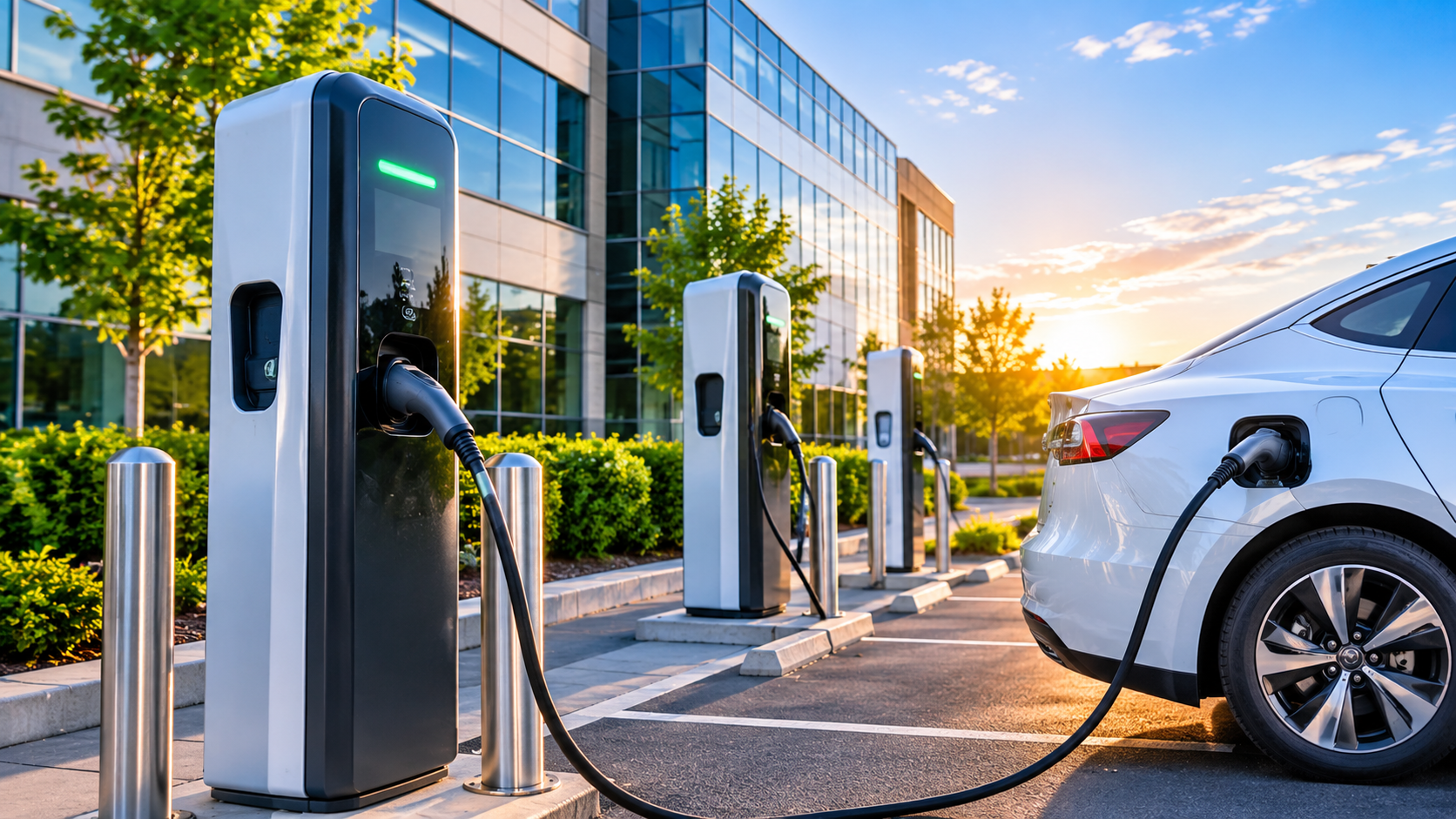
Put simply, it's everything needed to charge vehicles at a business: the chargers, the wiring behind them, the electrical capacity feeding them, the parking spaces, and often software that tracks usage. Commercial EV charging runs on the same basic idea as a home charger, but everything is bigger and built to handle more traffic.
A home setup serves one or two cars owned by the same person. A commercial EV charging station might serve employees all day, customers for an hour, and visitors who are just passing through. That means heavier electrical loads, tougher equipment, and, in many cases, ways to control access or collect payment.
- Chargers, the units drivers actually plug into
- Wiring, conduit, and panel or service upgrades behind the scenes
- Parking layout and signage
- Software for access, billing, or monitoring (optional, but common)
Why Businesses Should Invest in EV Charging
Most owners start asking about this because someone asked them. An employee, a tenant, a customer. Adding commercial EV charging stations gives people a reason to choose your place, and a reason to stay a little longer.
There's a longer game too. Vehicle choices are shifting, and a property that can already charge cars is easier to market than one that can't. Nobody can promise exact returns, and the numbers vary a lot by location, but the direction is hard to ignore.
- Convenient charging for employees and customers
- A more appealing property for tenants and visitors
- Readiness for where transportation is heading
- A possible revenue stream if you charge for sessions
- A visible way to support EV adoption
Types of Chargers Businesses Should Know About
Not every charger fits every property. Choosing the right commercial electric car charger comes down to how many cars show up, how long they stay, and how much electrical capacity you have to spare.
Level 2 Chargers
These are the everyday workhorses for offices, apartment lots, and retail properties. They charge over a few hours, which suits anyone who's parked for a while.
DC Fast Chargers
Built for quick turnarounds, like busy roadside sites or fleets that can't sit idle. They also demand much more power and a bigger upfront investment.
Networked Stations
Any charger type can be networked. That adds access controls, usage tracking, and billing, which helps if you want to manage who uses what.
A few questions narrow it down fast:
- How long do vehicles typically stay parked?
- How many will need a charge at the same time?
- How much spare capacity does your electrical service have?
- Do you plan to charge drivers or offer it free?
What to Consider Before You Install
Before you pick equipment, look at what you already have. A commercial EV charger can draw a lot of power, and plenty of older buildings simply weren't wired with that in mind.
It also pays to think a few years out. Putting in two ports today is smart, but running conduit for six now can save a lot of digging later. Permits, inspections, and local electrical codes come into it as well, so know the rules before you commit.
- Existing electrical capacity and panel space
- How many charging ports you need now and later
- Parking layout and where chargers can realistically go
- Installation costs and room for expansion
- Charging speed and equipment compatibility
- Permits, inspections, and electrical codes
Why Professional Electrical Installation Matters
Charger installs look simple from the parking lot. Behind the wall it's a different story. This is where Commercial Electricians in Maryland earn their keep: they run the load calculations, size the circuits, and make sure the work passes inspection the first time.
Cutting corners here causes real problems, from tripped breakers to equipment that fails early or can't be expanded. A qualified electrician looks at the whole building, not just the spot where the charger mounts.
- Load calculations to confirm your service can handle it
- Panel and circuit requirements
- Safe wiring and proper equipment installation
- Code compliance and inspections
- Integration with your existing commercial electrical system
EV Charging Trends in Maryland and Virginia
Maryland isn't the only place paying attention. Interest in commercial EV charging Virginia reflects the same regional shift, as owners start preparing their lots for more electric vehicles.
Planning ahead helps because demand tends to show up before the equipment does. A lot with the right conduit and spare panel capacity can add chargers quickly when the time comes. A lot without them can't.
- Growing interest across commercial properties
- More businesses preparing parking facilities for EVs
- Regional interest that reaches beyond one state
- Earlier planning means fewer surprises later
Choosing the Right Charging Solution for Your Property
Once you know your needs, compare options side by side. Ask how each of the commercial EV chargers on your list handles maintenance, software, and accessibility, and whether it can grow with you.
The best commercial charging station for a medical office isn't the best one for a retail center. Match the equipment to your property and how people actually use it, not to a spec sheet.
- Charging management and reporting
- Maintenance and warranty support
- Accessibility for all drivers
- Room to scale up later
Prepare Your Business for the Future of EV Charging
EV charging is becoming a normal part of running a commercial property. The sooner you check your electrical system, the more options you'll have. Start with a look at your capacity, your parking layout, and what your customers or employees will likely need.
Got Electric, LLC brings commercial electrical experience to projects like this, from the first assessment to the final connection. If you're thinking about charging for your property, reach out to Got Electric, LLC and get the conversation started.
Frequently Asked Questions
What is a commercial EV charging station?
It's a charging setup installed at a business or public property to serve employees, customers, visitors, or fleet vehicles. It includes the charger, the wiring behind it, and often software for access or billing. Got Electric, LLC can help you figure out what your property needs.
How much does it cost to install a commercial EV charger in Maryland?
It depends. Charger type, electrical upgrades, wiring distance, and installation complexity all move the price. A site visit is the only way to get a real number, and Got Electric, LLC can walk you through what drives it.
Which type of commercial EV charger is best for a business?
Level 2 chargers suit places where vehicles stay parked for a few hours, like offices and retail. DC fast chargers deliver power much faster but need more electrical capacity and cost more. Got Electric, LLC can help you match the charger to your traffic and your building.
Do commercial EV charging stations require professional electrical installation?
Yes. Commercial chargers draw serious power, and the installation involves capacity checks, permits, and safety requirements. Qualified electricians keep the work safe and compliant, and Got Electric, LLC handles the electrical side.
Why choose Got Electric, LLC for commercial EV charging and electrical services?
Because charging is an electrical project first. Got Electric, LLC offers commercial electrical expertise, safe installation, and charging setups planned around your property.
With offices in Ijamsville, MD & Linville, VA, Got Electric offers residential and commercial electric work, including installation, safety inspections, repairs, lighting design, and troubleshooting.
Got Electric also specializes in solar Energy Projects. Our electricians are fully licensed by state and local jurisdiction, ensuring that your electrical projects will be installed to industry and code standards.
Energized by Auxilium Technology