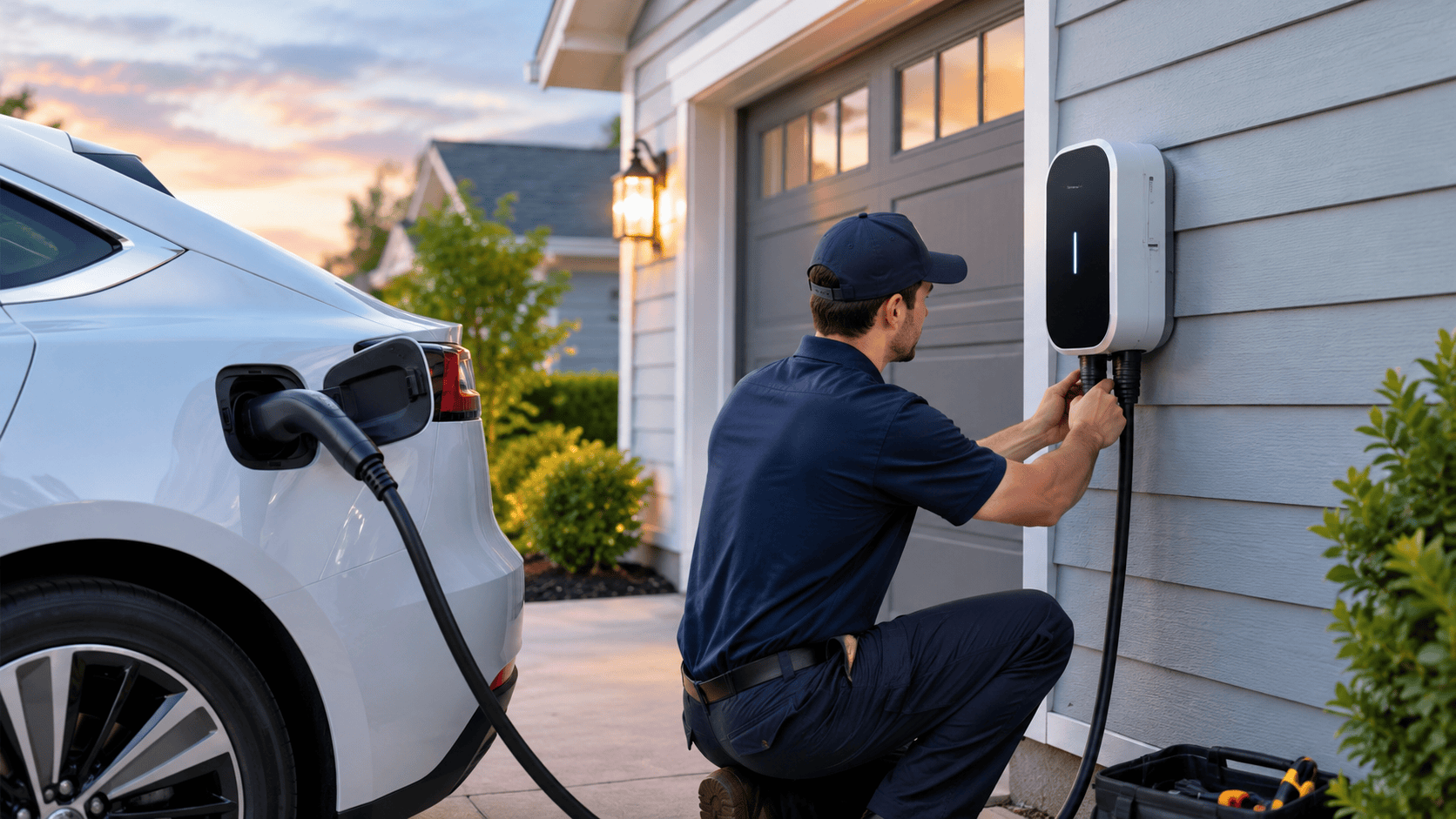

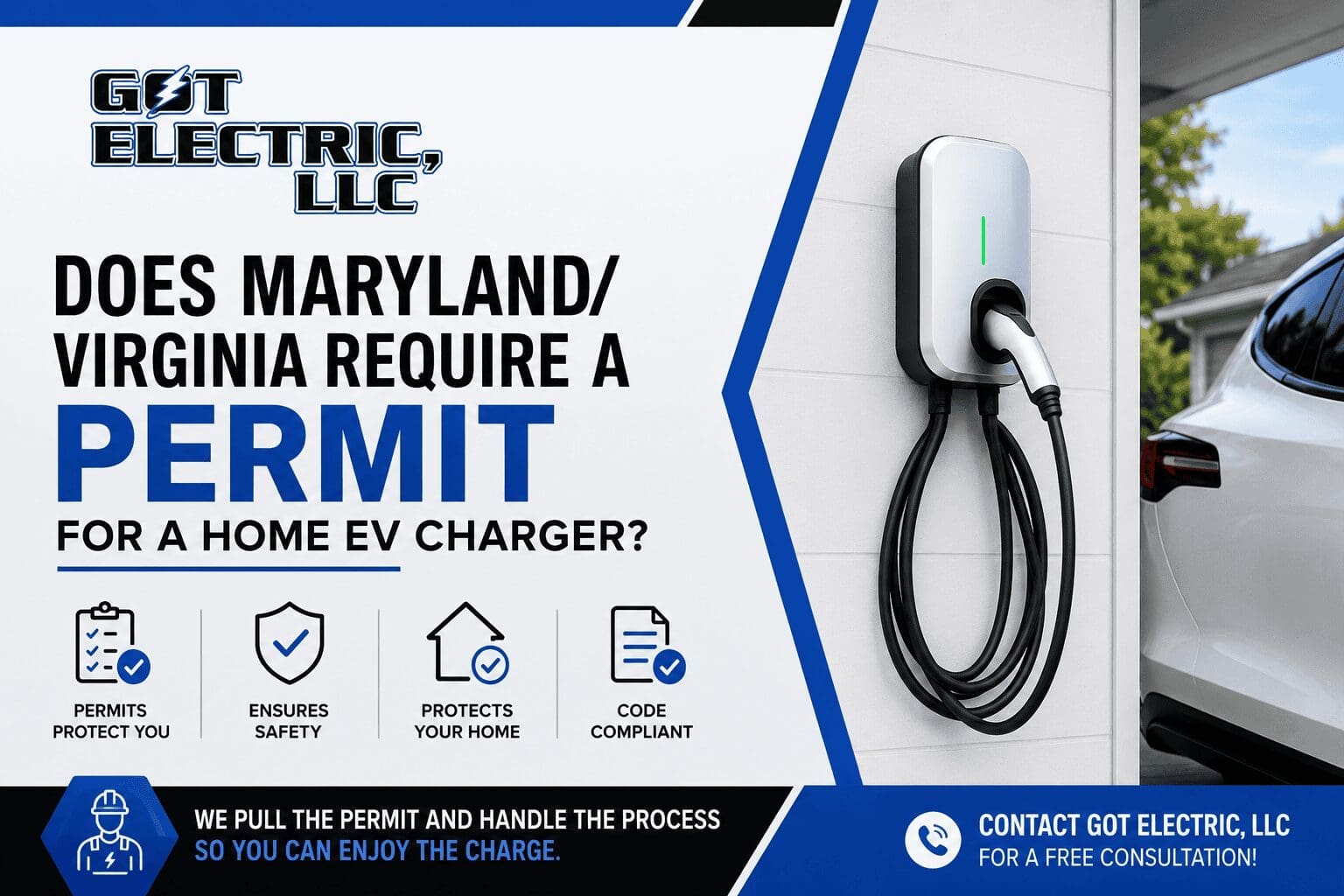
Yes, in most counties and cities across Maryland and Virginia, installing a Level 2 home EV charger requires an electrical permit. That's because a proper installation almost always involves adding a new dedicated circuit and, in some cases, upgrading your panel, both of which fall under standard electrical code requirements. If you're planning to hardwire a charger or install a new 240-volt outlet for one, assume you'll need a permit and plan for it; don't find out after the fact.
Table of Contents
Why a Permit Is Required in the First Place
A permit isn't just paperwork. It triggers an inspection, and that inspection is what confirms the work was done to code: correct wiring size, correct breaker rating, proper grounding, and safe placement relative to water sources and living space. That protects you in three concrete ways:
- Safety. EV chargers pull a sustained high load for hours at a time. Undersized wiring or a poorly rated breaker is a real fire risk, not a theoretical one.
- Insurance. If unpermitted electrical work causes a fire or damage, insurers can deny the claim outright.
- Resale. Unpermitted electrical work shows up in home inspections and title searches. Buyers' agents flag it, and it can hold up or kill a sale.
None of this are scare tactics; it's just what the permit process is actually for.
What Actually Triggers a Permit Requirement
Not every EV charger setup needs a permit. It depends on what physical work is involved:
Usually requires a permit:
- Installing a new dedicated 240V circuit for a hardwired or plug-in charger
- Upgrading your electrical panel or adding a subpanel to support the added load
- Adding a new circuit breaker to your panel
- Any work that involves running new wiring through walls, attics, or exterior lines
May not require a permit:
- Plugging a portable Level 1 charger into an existing, properly rated 120V outlet with no new wiring
- Using an existing 240V outlet that was already installed and permitted for another appliance (dryer, etc.), though you should still confirm the outlet and circuit can safely handle EV charging load
If your installation involves anything beyond "plug into what's already there," assume a permit applies.
Permit rules vary by county; confirm before you start.
Maryland and Virginia don't have one statewide EV charger permit rule. Each county and city sets its own process, fees, and timeline through its local permitting office. This means what applies in one jurisdiction may not exactly match a neighboring one.
Specifics you should confirm with your local permitting office or your electrician before work begins:
- Permit fee. Every county and city sets its own fee schedule for electrical permits, and these are updated periodically. Your county's Department of Permitting Services (or equivalent building department) will have the current fee listed on its website.
- Typical processing/approval time. Some jurisdictions issue electrical permits same-day online; others route through a review queue that can take days to weeks depending on current volume. This is worth asking about upfront if you're on a timeline.
- Whether a separate electrical inspection is scheduled after installation. Most jurisdictions require a final inspection before the permit is closed out, but how that inspection gets scheduled (automatically or by request) differs by office.
- Any HOA or condo association approval required in addition to the county permit. County permits and HOA approval are two separate processes. Even if your county doesn't require much paperwork, your HOA might have its own review step for exterior work or garage modifications.
If you're in Maryland, this typically means checking with your specific county's Department of Permitting Services. If you're in Virginia, it's usually the county or city building department. Rules and fees change, so don't rely on something you read a year ago. Confirm current requirements before scheduling work.
What Happens If You Skip the Permit
Skipping the permit doesn't just mean risking a fine, though that can happen too. The bigger risks show up later:
- Insurance disputes. If there's ever an electrical fire or damage claim, insurers can investigate whether the work was permitted. Unpermitted work is grounds for denial.
- Resale problems. When you sell your home, unpermitted electrical work can surface during inspection or title work, forcing you to get it retroactively permitted and inspected, often more expensive and disruptive than doing it right the first time.
- Real safety risk. Permits exist because inspections catch mistakes. Skipping that step means nobody verified the wiring and breaker sizing are actually safe for sustained EV charging loads.
How Got Electric Handles This
We pull the permit, schedule the inspection, and handle the paperwork as part of every EV charger installation. You don't have to track down your county's permitting office or figure out the process yourself. We also confirm your panel has the capacity for the added circuit before we start, so you're not caught mid-installation needing an upgrade you didn't plan for.
Not sure what your county requires? Contact Got Electric for a free consultation; we'll confirm your permit requirements and handle the entire process for you, from paperwork to inspection.
Frequently Asked Questions
Do I need a permit for a portable/plug-in EV charger?
Not if you're using an existing, properly rated outlet with no new wiring. If any new circuit is involved, yes.
Does my HOA need to approve it separately from the county permit?
Possibly. HOA approval and county permits are separate; check your HOA covenants in addition to pulling the permit.
How long does permit approval take?
Varies by county and workload. Ask your local permitting office before scheduling installation.
Can I install it myself to avoid permit costs?
In some jurisdictions, yes, but you still need to pull the permit and pass inspection. Some counties also restrict owner-installed work on high-load circuits; check first.
With offices in Ijamsville, MD & Linville, VA, Got Electric offers residential and commercial electric work, including installation, safety inspections, repairs, lighting design, and troubleshooting.
Got Electric also specializes in solar Energy Projects. Our electricians are fully licensed by state and local jurisdiction, ensuring that your electrical projects will be installed to industry and code standards.
Energized by Auxilium Technology