
If your power's gone out more than once this year, you're not imagining things. Storms roll through Maryland and Virginia every summer and fall like clockwork, and the grid isn't getting any younger. So really, the question isn't whether you need backup power. It's which kind actually fits your house.
Table of Contents
Short version: a generator costs less upfront and can run your whole house for days on end, as long as it has fuel. A battery backup is quieter, doesn't need fuel at all, and plays nicely with solar, but it's got a ceiling on how much power it can hold before it needs a recharge. Which one's right for you usually comes down to two things: how long your outages tend to last and whether solar is already part of the picture.
How Home Generators Work
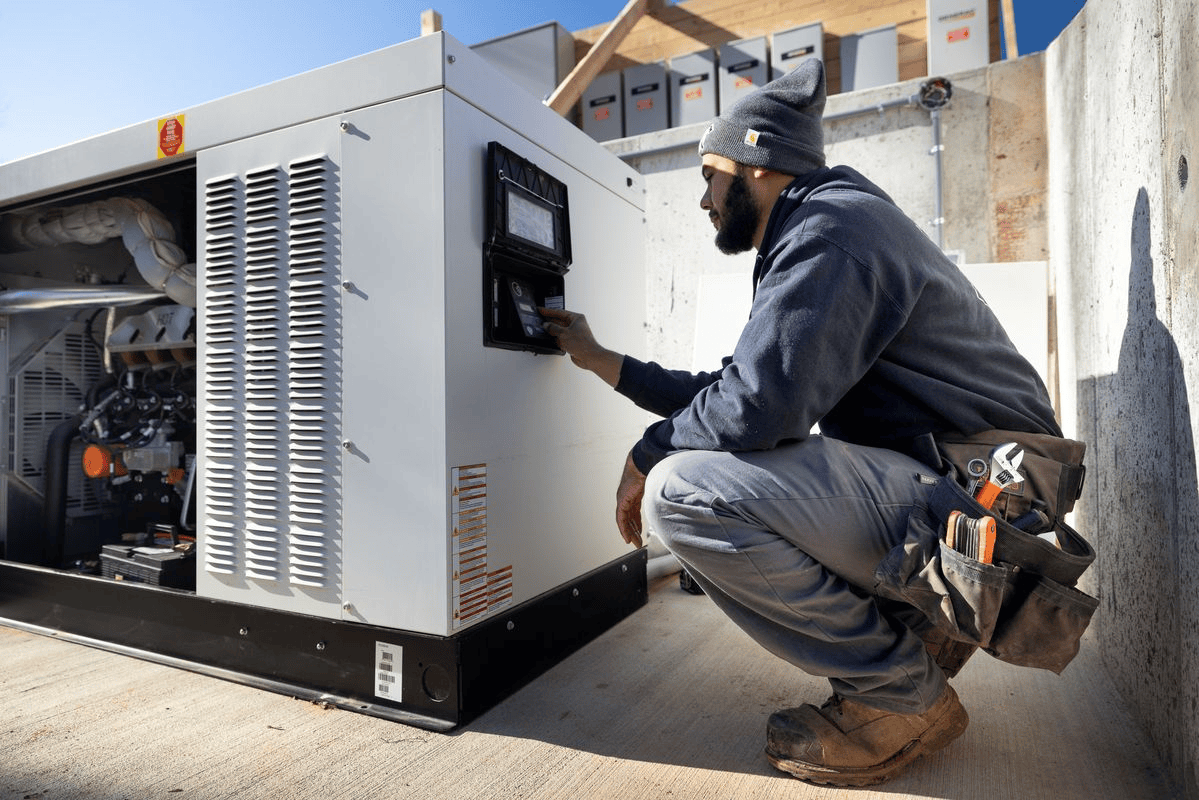
Most residential generators run on propane or natural gas, and they fire up automatically within seconds of losing power. They're hardwired into your panel through a transfer switch, so there's no fumbling with extension cords or manually flipping anything at 2 a.m. during a storm.
The big draw is simple: as long as there's fuel, it just keeps running. Size it right, and it'll carry your HVAC, well pump, fridge, and lights through a multi-day outage without you giving it a second thought.
That's basically why generator installs are one of the things we get flooded with calls about every time storm season hits.
The trade-off? Noise, mostly, and upkeep. They're not quiet when running, and they need real maintenance, oil changes, battery checks, and test runs to actually start when you need them to. Skip that stuff, and you find out the hard way, usually mid-outage, that the generator you paid for isn't going to help you.
How Battery Backup Systems Work
A home battery stores electricity, either pulled from the grid overnight or from solar panels during the day, and releases it when the lights go out. No fuel, no exhaust, barely a hum. The switchover is instant.
Here's the catch, though: a battery only holds so much. Once it's tapped out, you're waiting either for the grid to come back or for the sun to come up if you're running on solar. For most homes, that means a battery works best for shorter outages or as a bridge until a generator kicks in, rather than something that's going to power everything for three days straight. You'd need a serious (and expensive) battery bank to pull that off.
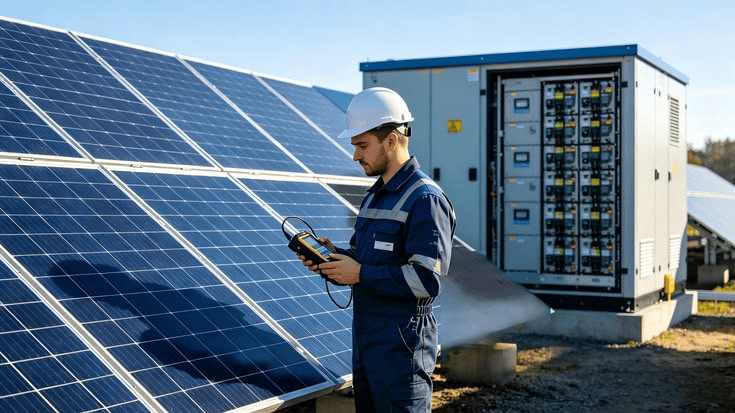
If you've already got solar, though, a battery just makes sense. You're storing power you're already making instead of selling it back cheap and buying it back later at a markup. No solar? A battery's still a legit option; just do the math differently.
Cost Comparison
| Generator | Battery Backup | |
| Upfront cost | Lower | Higher |
| Runtime | Days (fuel-dependent) | Hours (capacity-dependent) |
| Noise | Audible when running | Silent |
| Maintenance | Annual service, oil changes | Minimal, mostly software/monitoring |
| Fuel needed | Yes (propane/natural gas) | No |
| Pairs with solar | Not directly | Yes. |
Honestly, neither one is the "right" answer across the board. It really just depends on what you're guarding against and how much maintenance you're up for.
Which One Actually Fits Your Situation
Outages that are short but frequent, an hour here, two hours there, a handful of times a year? A battery covers that without you ever touching fuel or a maintenance schedule.
Outages that stretch a full day or more after a bad storm? That's generator territory. It's the more dependable pick because it doesn't quit unless you let the fuel run out.
Already got solar, or planning to install it? A battery puts that investment to work day and night instead of just during daylight.
Want to install it once and basically never think about it again? A properly sized generator gets you closest to that.
Tight on budget but still want some coverage? Batteries can be added onto over time. Generators are usually one bigger hit up front.
Plenty of homeowners around Maryland and Virginia end up with both a generator for the multi-day outages, a battery for everyday resilience, and solar storage. If your area loses power a lot, that's not overkill. That's just being realistic about where you live.
Frequently Asked Questions
How long does a home generator last?
With proper service and maintenance, a residential standby generator typically runs 15–20 years. How long it actually lasts depends on the fuel type and how often you're putting it to work.
Can a battery backup power my whole house?
Depends on the battery's size and how much power your house pulls. One unit usually covers the essentials: a fridge, some lights, wifi, and a handful of outlets, not a full house running HVAC. Add more units, get more coverage, and pay more for it.
Do I need a permit to install a generator or battery system in Maryland or Virginia?
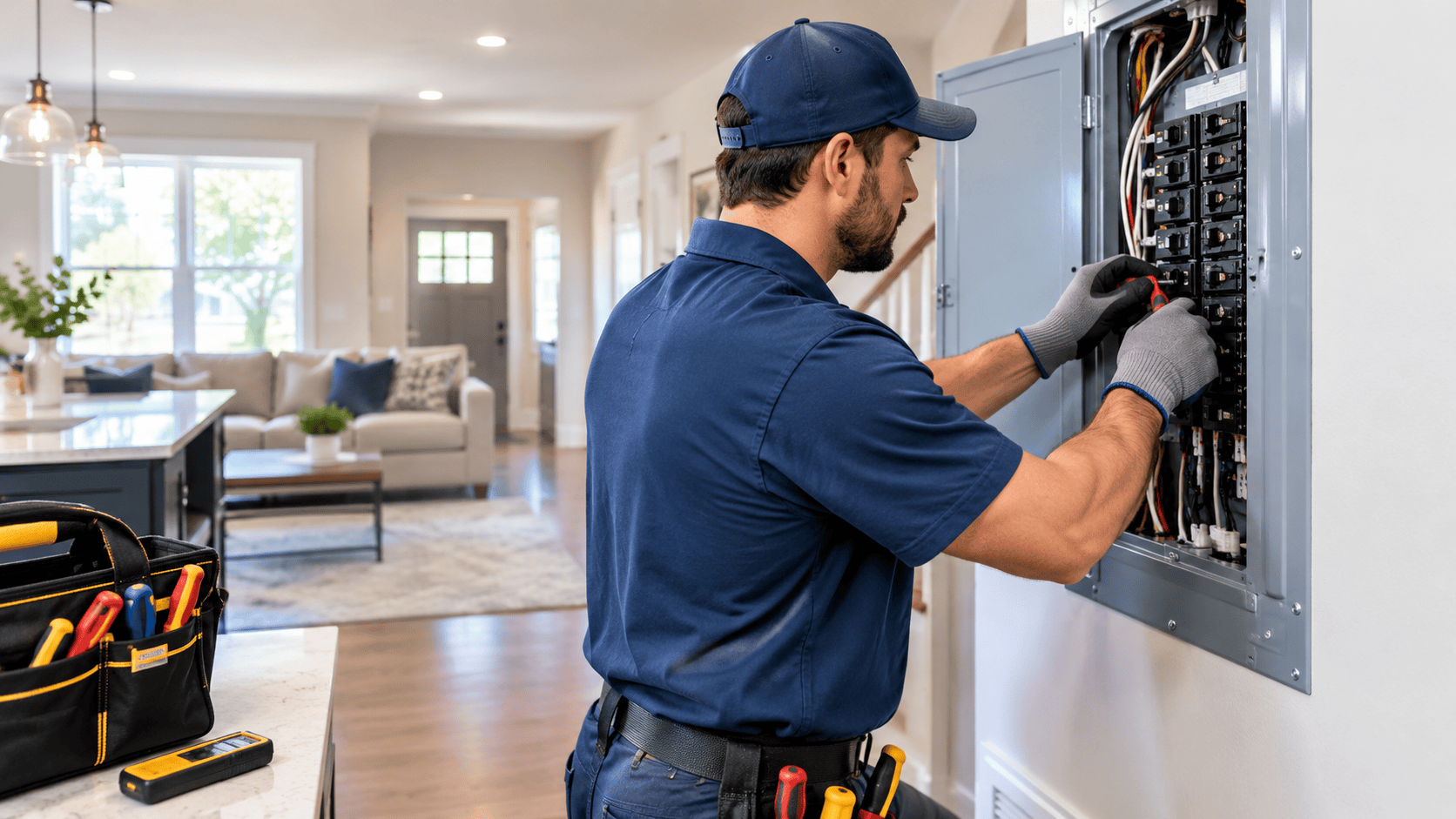
Yes, both of them. They tie directly into your main electrical panel, so permits and inspections are required either way. Your electrician handles that as part of the install, so it's one less thing on your plate.
Which one is cheaper to run long-term?
Batteries skip the fuel cost entirely, but they'll eventually need replacing, and that's not cheap. Generators cost you more per outage in fuel but tend to last longer for what you paid upfront.
Not sure which one makes sense for your place? Got Electric installs and services both generators and residential battery backup systems across Maryland and Virginia. Get a free estimate, and we'll walk you through what actually fits your home, your budget, and how often your power really goes out.
With offices in Ijamsville, MD & Linville, VA, Got Electric offers residential and commercial electric work, including installation, safety inspections, repairs, lighting design, and troubleshooting.
Got Electric also specializes in solar Energy Projects. Our electricians are fully licensed by state and local jurisdiction, ensuring that your electrical projects will be installed to industry and code standards.
Energized by Auxilium Technology