
Short answer: maybe. Homes with older 100-amp electrical panels often need an upgrade to 200-amp service before adding a Level 2 EV charging station or a solar system, but plenty of newer homes already have enough capacity and don't need to touch the panel at all. The only way to know for sure is a load calculation, which is one of the first things a residential electrician should check before quoting either project.
Table of Contents
Here's how to figure out which camp you're in before you call anyone.
Signs Your Panel Might Be Outdated
A few things tend to show up together in homes that need an upgrade:
- The panel is original to a house built before the mid-1990s. A lot of these were sized for a smaller electrical load than modern homes actually use.
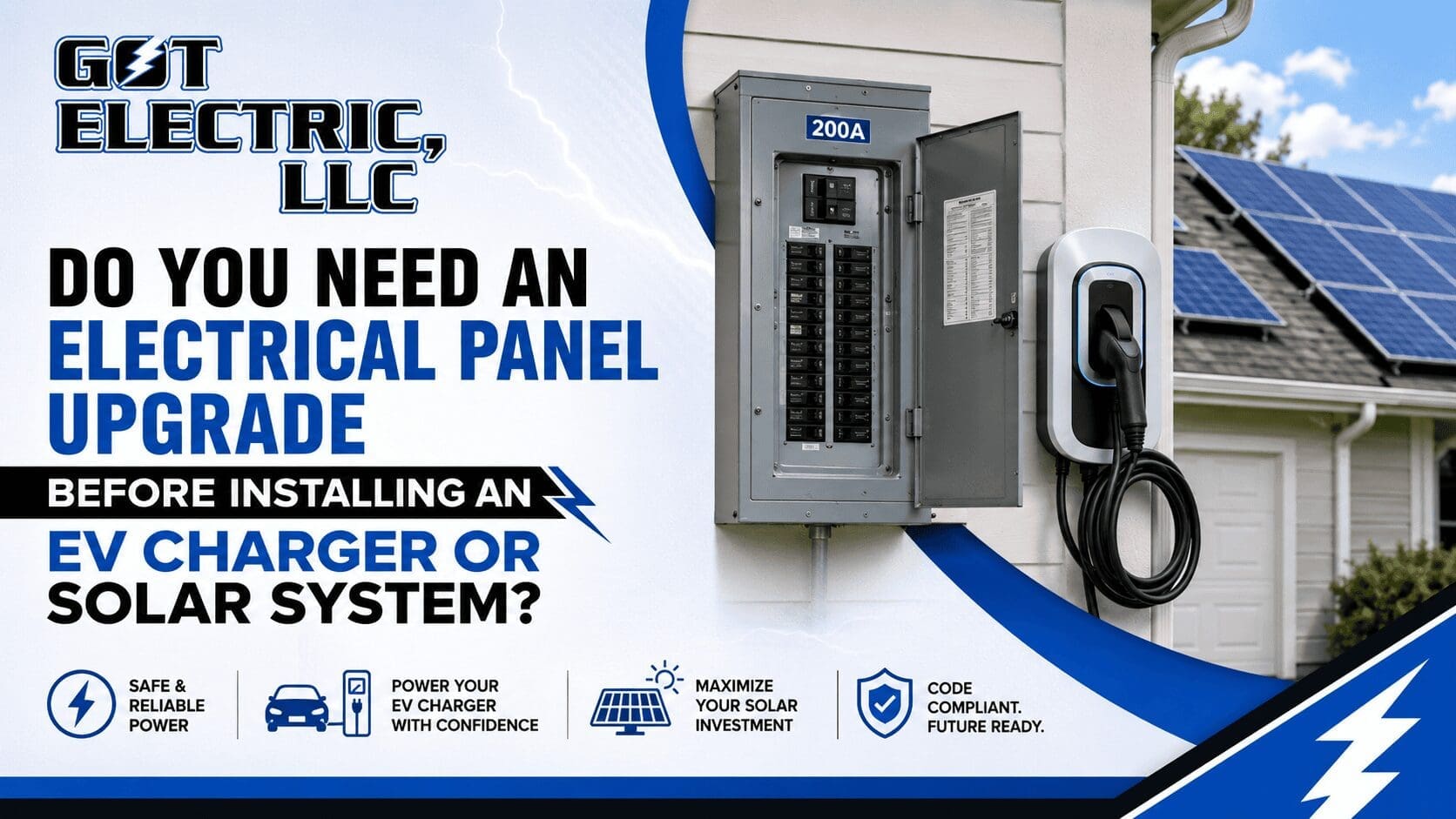
- It's rated at 100 amps or less. Check the main breaker at the top of the panel; the number stamped on it tells you the amperage.
- Breakers trip when you run big appliances at the same time, say, the dryer and the microwave together.
- There's no room left for new breakers. If every slot in the panel is already full, adding a dedicated circuit for a charger or solar inverter means something has to give.
None of these guarantee you need an upgrade, but any of them is a reason to get the panel checked before you commit to an electric charger installation or solar quote.
Why EV Chargers and Solar Both Strain Older Panels
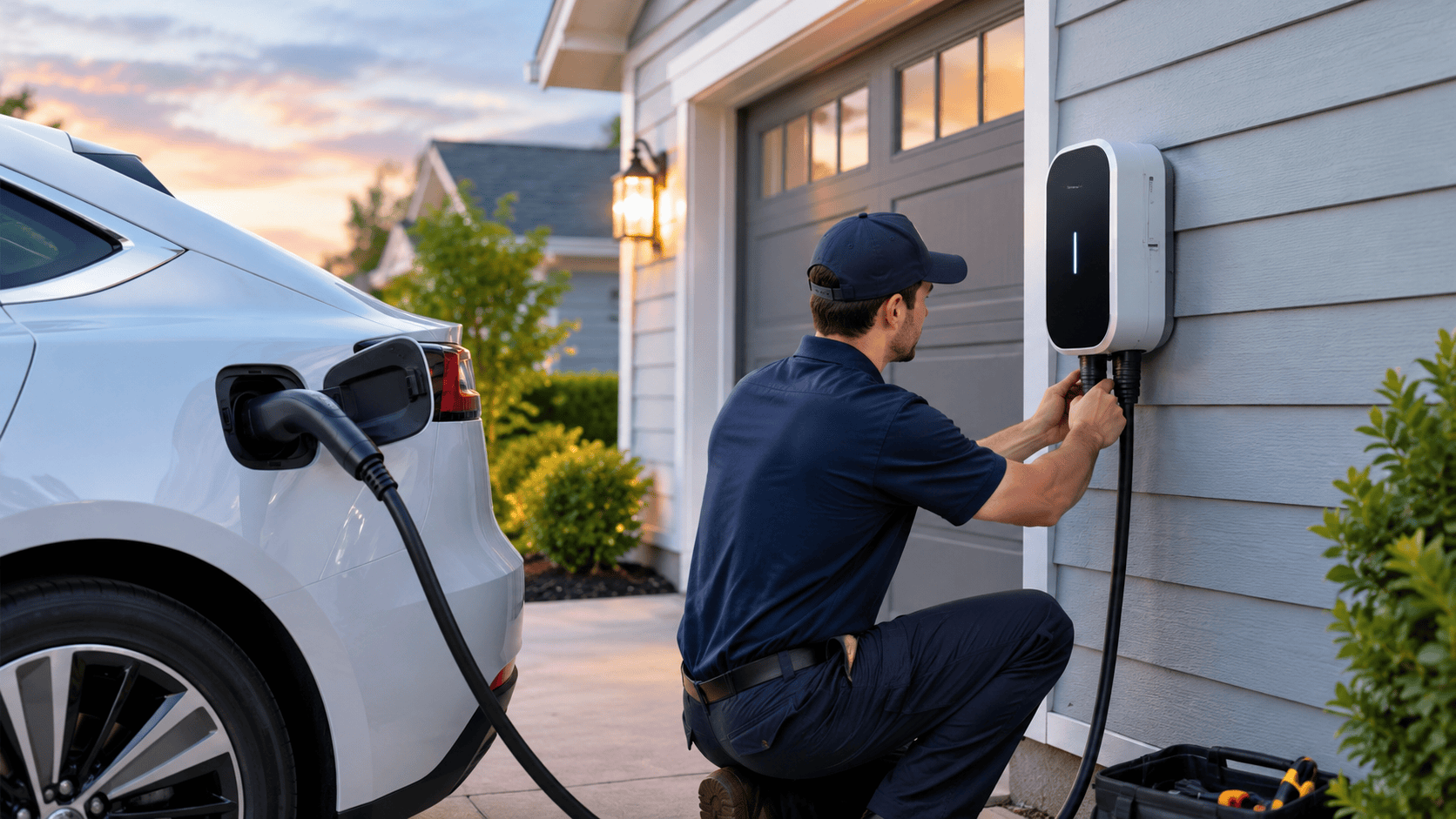
A Level 2 EV charger typically draws 30 to 50 amps on its own dedicated circuit, which is a serious chunk of a 100-amp panel's total capacity, especially once you add central air, an electric water heater, and everything else already running in the house. EV Residential Chargers installed on undersized panels either won't get approved by inspection, or they'll be limited to a slower charge rate to stay within safe limits.
Solar works a little differently. The panel doesn't just need to handle new load; it needs to safely handle power flowing in from the solar system, not just out to your appliances. Older panels weren't built with that in mind, and there are specific code rules (called the 120% rule) that determine whether a panel can accept solar without modification.
Basically, both EV charging and solar ask more of your electrical system than it may have been designed for. That's not a sales pitch; it's just how the math works.
What the Upgrade Process Actually Looks Like
If a load calculation shows you need more capacity, here's the general sequence:
- The electrician performs a load calculation and adds up your home's actual and potential electrical demand.
- Permit is pulled with the county or city, since panel work always requires inspection.
- The panel is upgraded, typically from 100-amp to 200-amp service; this usually takes a day for a straightforward swap.
- Inspection is scheduled and passed.
- An EV charger or solar system is installed on the newly upgraded panel.
Costs vary by home and location, but a panel upgrade is a meaningful added expense on top of the charger or solar install itself, which is exactly why it's worth finding out early, not after you've already bought equipment.
What Happens If You Skip It
Some homeowners try to install a charger or solar without checking panel capacity first. A few things can go wrong:
- The installation fails inspection, and you're back to square one after paying for labor.
- The charger works, but underpowered a Level 2 charger that should fully charge overnight instead takes twice as long.
- Breakers trip repeatedly once the new load is added to an already-maxed panel.
- Insurance or resale issues down the line, since unpermitted electrical work can come up during a home inspection or claim.
None of this is worth the shortcut. A load calculation takes an electrician maybe 20–30 minutes and settles the question for good.
Frequently Asked Questions
How do I know my panel's amperage?
Open the panel door and look at the main breaker, the largest breaker at the top, usually labeled 100, 150, or 200. If you're not comfortable opening the panel yourself, an electrician can check it in minutes during a home visit.
Does adding solar always require a panel upgrade?
No. Many homes with adequate existing capacity, especially those already at 200-amp service, can add solar without any panel work. It depends on your home's total electrical load, not just the solar system size.
Can I install an EV charger myself to avoid the cost?
Level 2 chargers require a dedicated 240-volt circuit and, in most jurisdictions, a permit and inspection. DIY installs that skip this step create both a safety risk and a problem if you ever sell the home.
Is a panel upgrade a one-time cost, or does it affect future projects too?
One-time. Once your panel has the capacity, it supports future additions, a second EV charger, a battery backup system, or an expanded solar array without needing another upgrade.
Thinking about an EV charger or solar install? Got Electric offers Professional Solar Panel Services and EV charger installation across Maryland and Virginia, starting with a straightforward load calculation so you know exactly what your home needs before you spend a dollar. Request an estimate.
With offices in Ijamsville, MD & Linville, VA, Got Electric offers residential and commercial electric work, including installation, safety inspections, repairs, lighting design, and troubleshooting.
Got Electric also specializes in solar Energy Projects. Our electricians are fully licensed by state and local jurisdiction, ensuring that your electrical projects will be installed to industry and code standards.
Energized by Auxilium Technology